
The Beauty of Dusty Things
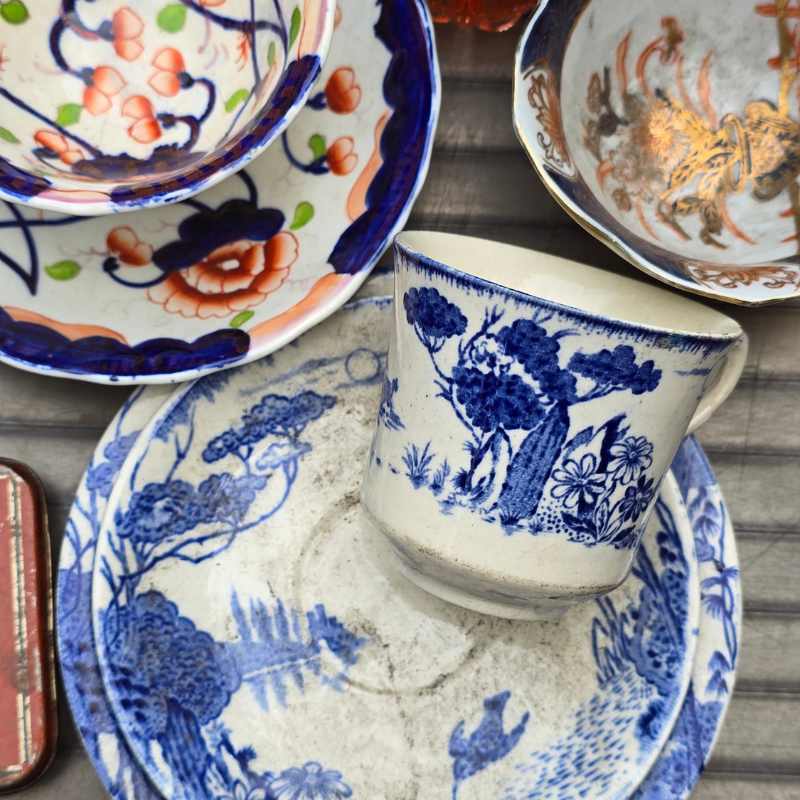
I am often drawn to the pieces others overlook. The chipped cup, the worn plate, the glaze dulled by countless washings. Their value lies not in pristine condition but in the traces of lives quietly lived around them.
The Return of the Worn Interior
There is a particular kind of beauty that only arrives over time. It settles into the folds of faded quilts, gathers along the spines of books, and dulls cheerful fabric into smoke-soft colour. It’s the craze in old china, the tone in foxed paper, a chair pushed back from a table thousands of times with paint chips revealing generations of colour beneath the surface. The beauty in curtains faded unevenly by years of afternoon light. These imperfections become part of the object itself. Evidence of use, of touch, of rooms once lived in fully. It’s the sort of beauty that modern interiors often try to erase, only to spend years attempting to recreate. Think distressed furniture, artificially aged mirrors, reproduction vintage signs, weathered paint finishes, furniture sold as rustic.
Dusty things ask for a different kind of looking. A slower gaze reserved for objects that have absorbed years quietly. Old things invite the senses in different ways. The smell released when opening a linen cupboard untouched for months; the gentle resistance on an old wooden drawer; the faint crackle of turning a foxed book page, it’s smell; the chipped edge of a favourite jug; the gentle creak of floorboards that know exactly where your weight will fall.
Certain scents seem to carry memory differently. Whenever I smell violets I think of my grandmother who died in the 1980s . For a brief moment it is as if she is somewhere nearby. Not because I am deliberately remembering her, but because the scent arrives before thought does. Perhaps this is why old objects can feel so powerful. They engage more than the eye. A scent, a texture, the weight of familiar material in the hand, all have the ability to reconnect us with people, places and moments that have long since drifted away.
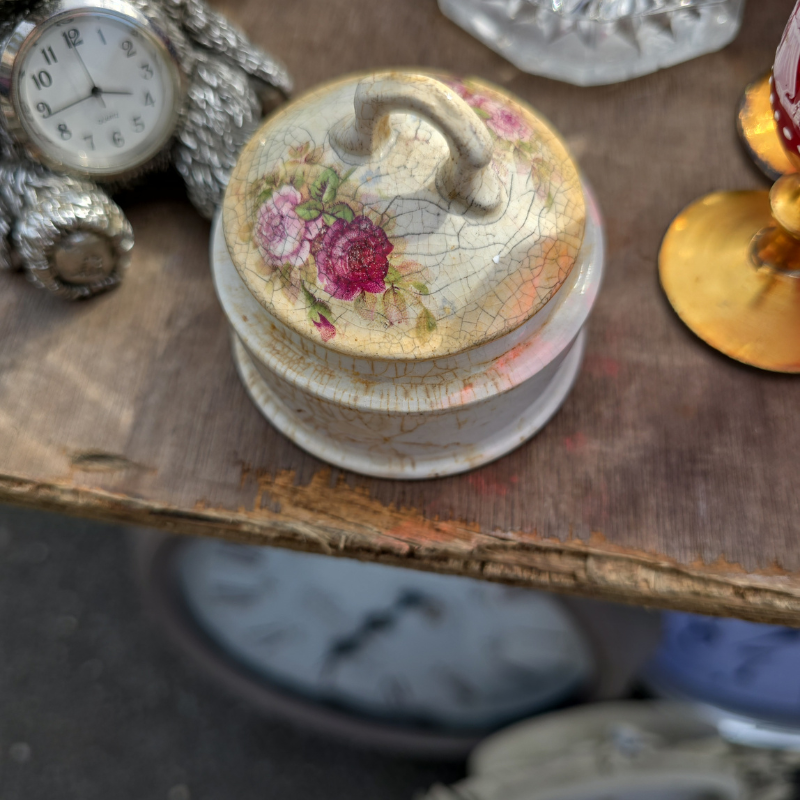
The objects I collect are rarely perfect. A crackled trinket pot, a worn tabletop, a clock that has long since lost its precision. What draws me is not their condition but their persistence. Like the tiled floors that were hidden beneath carpet in our former Victorian house, they remind me that beauty often survives quietly, waiting to be noticed again.
When we bought our Victorian house, (in the 1990s) much of its history had been covered over. Original tiled floors lay hidden beneath carpet. Fireplaces had been boarded up. Beautiful old doors disappeared behind plain sheets of hardboard. It wasn't neglect so much as a desire for newness, each generation remaking the house according to its own tastes.
Yet uncovering those details felt less like renovation and more like recovery. The tiles were still there. The fireplaces were still there. The doors had simply been waiting beneath the surface. Their age did not diminish them. If anything, it made them more interesting.
My own fascination with older things began with textiles and in the kitchen. Not with antiques, but with kitchenalia. Enamelware, vintage mixing bowls, (I have quite the collection), storage jars and utensils from the 1940s, 1950s and 1970s slowly found their way onto shelves and worktops. They brought with them a sense of charm and character that modern replacements seemed to lack.
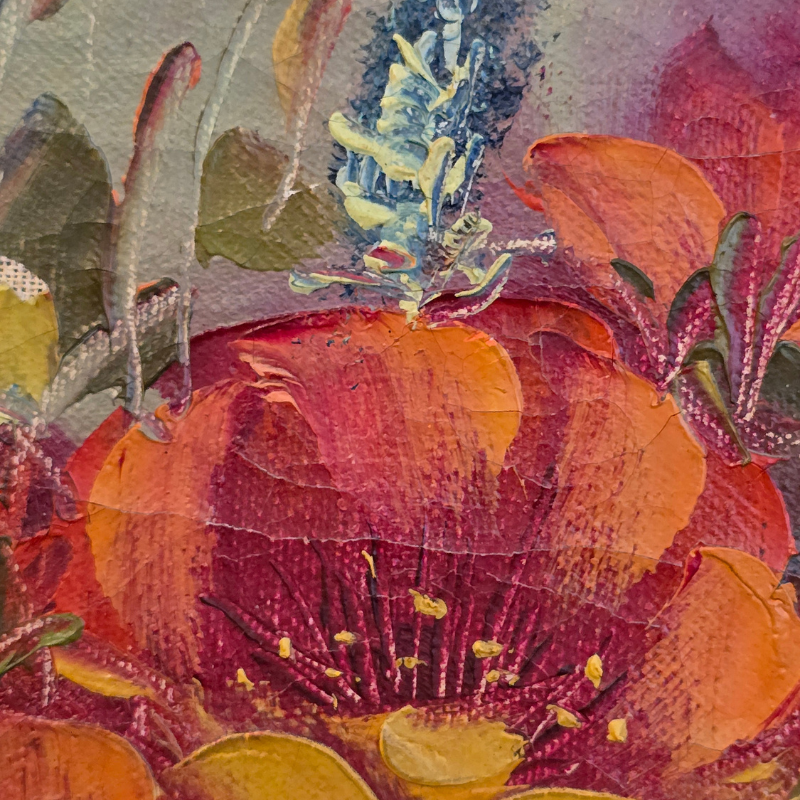
I am often less interested in the flower itself than in what time has done to it. The faded colours, the crackled surface, the suggestion of years passed. Dusty flowers seem to hold memory differently, as though they have been quietly waiting for someone to look closely again.
For much of the twentieth century, progress was measured in replacement. Yet somewhere along the way, many of us began looking back.
What appealed to me most was some of these objects belonged to a world I had never known. They were not reminders of my childhood. Quite the opposite. They offered a glimpse into lives and routines that felt just beyond reach. The shape of a flour tin, the lettering on a storage jar, the wear on a textile, all hinted at kitchens and households that had disappeared long before I arrived.
Looking back, I think I was less interested in the objects themselves than in the atmosphere they carried, the softer traces of ordinary domestic life. They made the kitchen feel layered, lived in and connected to something larger than the present moment.
Curtains faded by sunlight. Patchwork quilts worn thin at the fold. Books with loosened spines and pencilled inscriptions. For me, a delicate porcelain cup with a tiny chip is not a flaw but an object that reveals, rather than conceals, the passing of time.
Perhaps what we miss is not age itself, but evidence. Signs that a room has been lived in, that hands have reached for the same drawer, that a favourite chair has stood by the same window for decades.
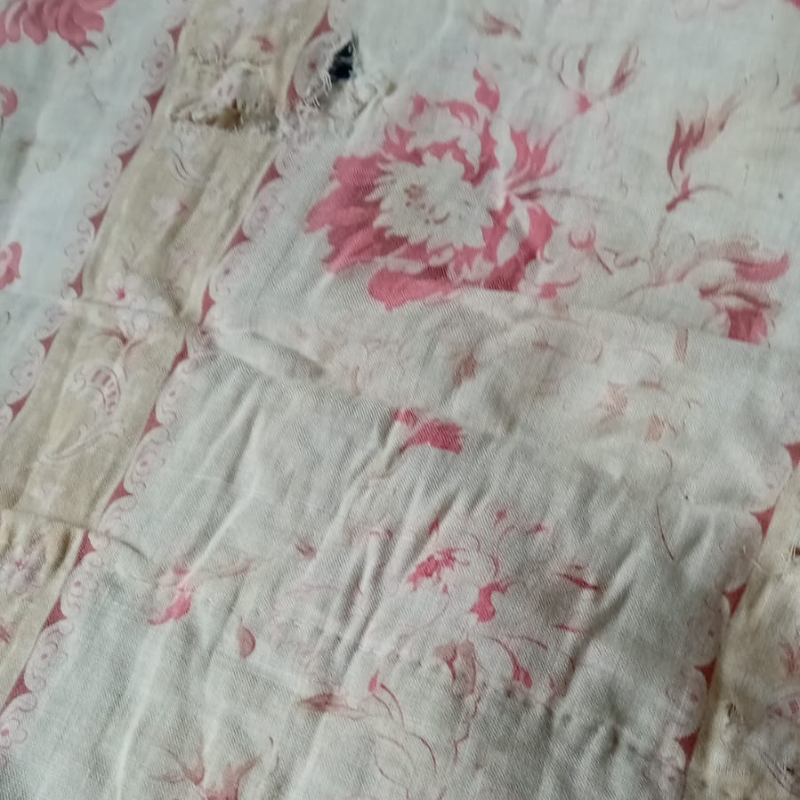
The colours in old textiles rarely disappear all at once. Instead they soften gradually, fading into gentler versions of themselves. This fragment of floral cloth has lost some of its brightness over time, yet gained something else, a quietness that feels impossible to reproduce.
Faded Cloth and Soft Colour
Few things demonstrate the beauty of age more gently than cloth and for many years I have been drawn to pieces softened at the edges by time. New fabric often arrives bright, crisp and certain of itself, but this is not my jam. I love fabrics whose colours are mellow. Fabrics with patterns blurred slightly. Fabric where sunlight has settled into the fibres. A floral that may once have appeared bold becomes quieter, more atmospheric, as though it has learned to sit comfortably within a room rather than demand attention.
Some of my favourite textiles carry these traces. A faded antique French floral. A worn length of linen. A quilt softened by years of folding and unfolding. Their appeal lies not in perfection but in transformation. They have become something different through use. Perhaps that is why old cloth feels so comforting. It holds a record of domestic life. Curtains opened each morning. Tablecloths spread for ordinary meals. Cushions plumped, mended and used again. The fabric absorbs these small rituals until it becomes inseparable from them.
In a world that often celebrates the pristine and untouched, faded cloth offers another kind of beauty. One that feels warmer, gentler and more human. Not preserved against time, but shaped by it.
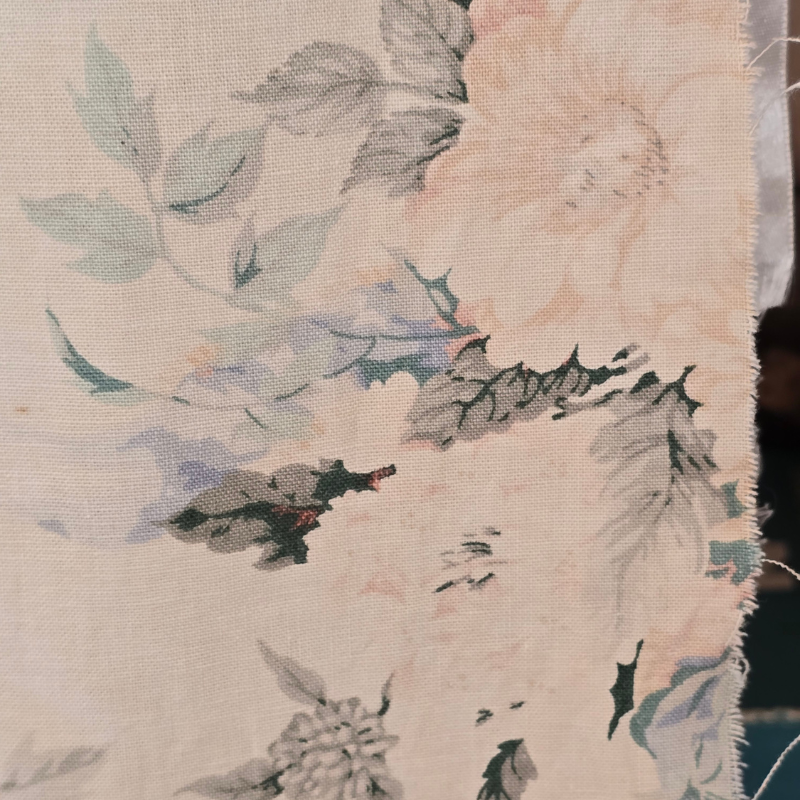
Some fabrics seem to have been left in conversation with the light. Years of sun, washing and use have softened the pattern until it becomes almost a memory of itself. The flowers remain, but quieter now, their colours settling into the cloth like a whispered story.
Dusty Flowers
Flowers seem particularly suited to remaining. Long after the bouquet has faded, they linger elsewhere and in my case everywhere. Printed on cotton. Embroidered onto tablecloths. Painted onto china. Pressed between the pages of books. They reappear on old wallpaper, floral tins and faded postcards, quietly surviving in forms their living counterparts never could.
Perhaps that is why I am drawn to them.
Not only fresh flowers necessarily, but the flowers that time has softened. The rose on a worn length of chintz. The faded anemones of an old print. The almost-forgotten blooms scattered across a piece of fabric that has spent decades folded in a cupboard.
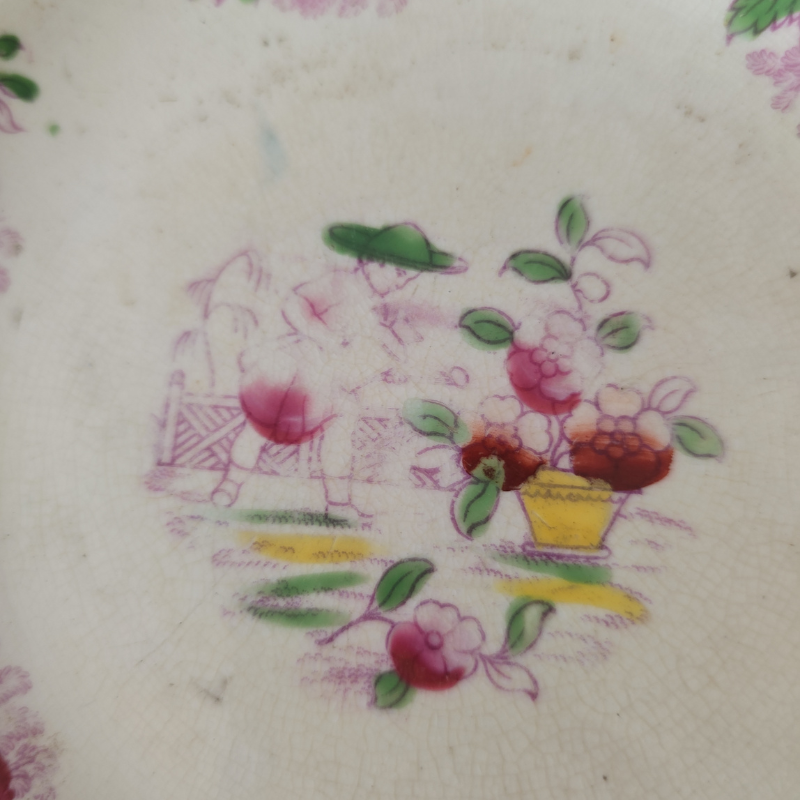
Dusty flowers often survive in unexpected places. On the surface of an old plate, beneath a network of fine crackles, a tiny floral scene remains. The colours have softened and the details have blurred, yet the image still carries a sense of charm and domesticity, as though it has quietly outlived the room for which it was first made.
Their colours change. Bright reds become dusty pinks. Greens soften into grey. Sharp outlines blur. Yet they often become more beautiful rather than less. Time removes their certainty and leaves something gentler behind.
Like scent, flowers seem capable of carrying memory. Not always a specific memory, but a feeling. A season. A room. A glimpse of a life that existed before our own. They remind us that beauty does not disappear when it fades. It simply changes character.
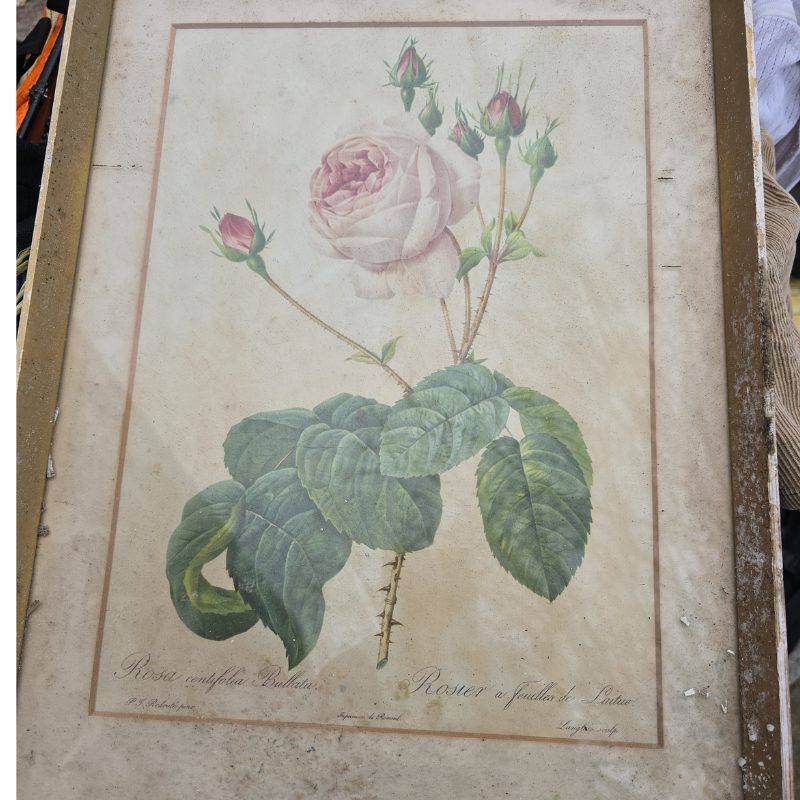
Dusty flowers linger long after the garden itself has faded. Botanical prints such as this were once treasured for their accuracy, yet time has given them another kind of beauty. The paper has foxed, the colours have softened and the frame bears the marks of age, transforming a simple rose study into an object rich with atmosphere and memory.
Objects With a Past and a Place to Go
My fascination with old things began not with antiques, but with textiles.
At a jumble sale many years ago, I spotted two pieces of 1950s fabric slung over a wall. I can still remember the feeling of seeing them. I had only fifty pence in my pocket and could afford just one. Choosing between them felt impossible. I bought the piece I loved most and left the other behind, then spent years regretting it.
The fabric came home with me and remained untouched for almost a decade. I folded it. Unfolded it. Draped it over chairs. Took it out to admire the colours and design and put it away again. It was less a possession than a companion. Eventually, after ten years, I finally gathered the courage to cut into it.
Looking back, I realise it was never really about the fabric itself. It was about what it represented. The possibility that something overlooked, discarded or unfashionable could still possess extraordinary beauty.
That single piece of cloth led to another, and then another. Over time, textiles became books, kitchenalia, pottery, paper and all manner of other objects. Yet the feeling remained the same. I was drawn not to perfection, but to character. To things that had lived a life before arriving in mine.
Perhaps that is why I still collect. Not because old objects are valuable, but because they carry atmosphere. They remind us that beauty can survive fashion, usefulness and time itself.
Objects with a past, and perhaps, a place to go.
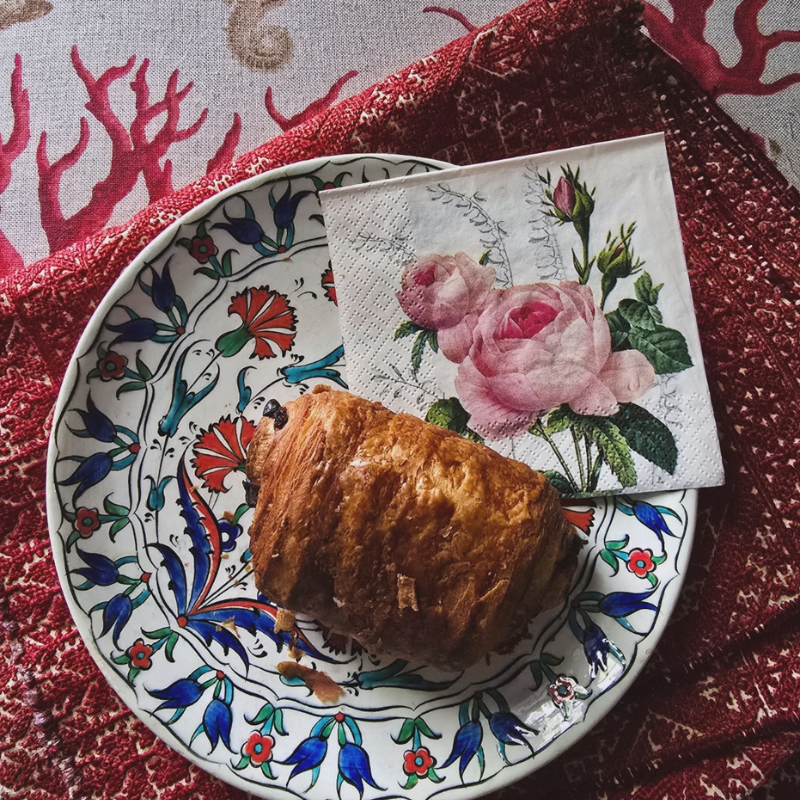
Perhaps this is what dusty things offer us in the end, not nostalgia so much as continuity. A well-used plate, a rose printed on a paper napkin, a pastry enjoyed in a quiet moment. Ordinary objects become meaningful not because they are rare, but because they remain. They accompany daily life, gathering memories until they feel woven into the fabric of home itself.
The Beauty of Remaining
Dusty things are often overlooked.
They sit quietly in market stalls, charity shops, attics and cupboards. Their colours have softened. Their surfaces bear the marks of use. They ask a little more of us than something new. A little more attention. A little more imagination.
Yet perhaps that is precisely their gift.
The older I become, the less interested I am in perfection and the more interested I am in presence. In the faded floral that has survived decades of changing fashions. In the smooth bannister polished by generations of hands. In the scent of violets that, for a fleeting moment, brings my grandmother back into the room. In the piece of fabric folded and unfolded for years because I could not quite bear to cut into it.
These things remind us that beauty does not always announce itself loudly. Sometimes it lingers quietly. In worn cloth, foxed paper, chipped paint and softened colour. In objects that have remained.
Perhaps that is what I have been searching for all along. Not antiques. Not collectables. Not even textiles.
But traces.
Small reminders that people were here before us, that rooms were lived in, that hands touched the same objects we touch now. Evidence that time has passed, and that something beautiful remained behind.
Not perfection.
Presence.